You have probably heard the joke that the answer to every question in Sunday School is “Jesus.” But this really isn’t a joke. The answer to everything IS Jesus. He is especially foreshadowed in the Tabernacle elements and in the annual Day of Atonement.
After his glory appeared in a cloud above the mercy seat1 between the two cherubim (winged creatures) in the most holy place, God spelled out the very specific way to enter that space (Lev 16) on year on the Day of Atonement2—the 10th day of the 7th month (Lev 16:29–31).
But only the high priest entered the inner room, and that only once a year, and never without blood, which he offered for himself and for the sins the people had committed in ignorance.
Heb 9:7 NIV
The day was a sabbath rest. The people did not work, but fasted, and offered special offerings (Num 29:7–11).
First, the High Priest cleansed himself physically. He took off his usual elaborate garments “for glory and beauty” (Ex 28:2), bathed, and put on a linen tunic for humility (Lev 16:4).
Then he addressed his own spiritual condition. He sacrificed a ram as a burnt offering in complete surrender to God. And he sacrificed a bull as a sin offering to make atonement for himself and his household (16:11).
Next he prepared to enter the Most Holy Place. So that he would not die in the presence of God, he first filled a fire pan with coals from the altar combined with incense. Once inside the smoke from the incense hid the mercy seat while he sprinkled the bull’s blood on and before the mercy seat (16:12–14). This way, his sins were covered over by the blood of the bull.
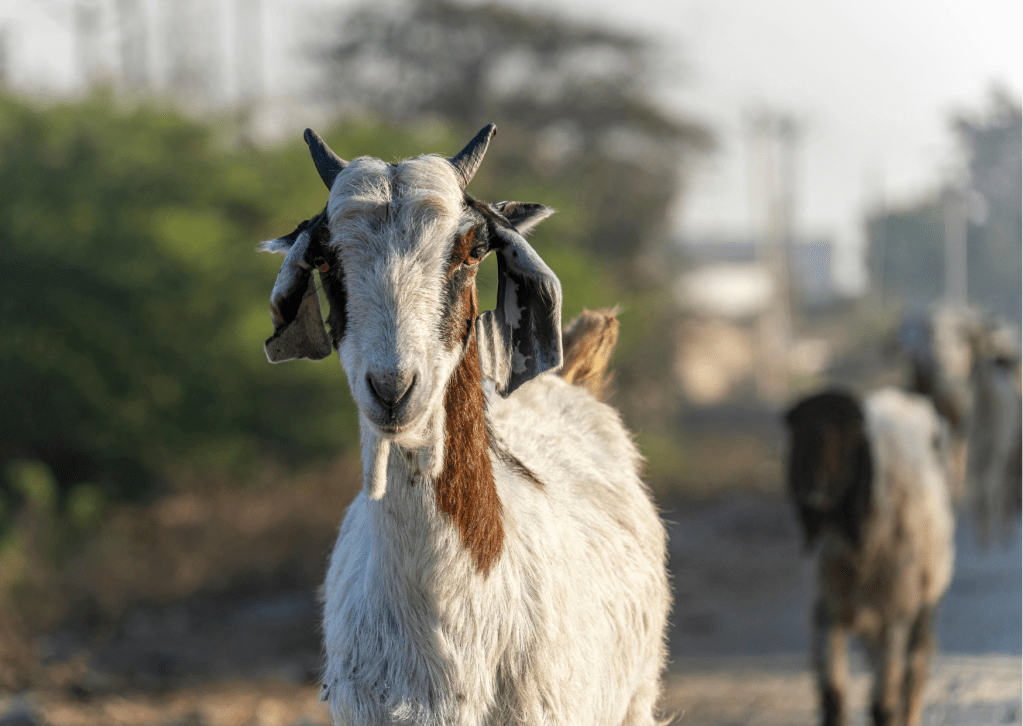
Once his own sin was atoned for, he addressed the sins of the people. He chose two goats. By casting lots one goat was chosen FOR GOD to be sacrificed as a sin offering. Its blood was sprinkled on the altar of sacrifice and then taken into the most holy place to sprinkle on the mercy seat in the same way as the bull (16:8–9, 15).
The second goat was FOR AZAZEL. The High Priest lay both hands on the goat’s head and confessed all the sins of the people. Then an appointed goat-keeper took the animal to release it into the wilderness. It carried the sins of people away presumably to be devoured by beasts (16:10, 21–22).
Scholars offer three possible meanings for Azazel:
- the goat that departs/escapes (a scapegoat)
- the wilderness where the goat died (the rocky precipice)
- the name of a demon inhabiting the desert (Azazel)
While the meaning is debated, the symbolism is clear.
“The act of sending the live goat out into the wilderness, which was unholy ground, was to send the sins of the people where they belonged—to the demonic domain. When Jesus dies on the cross for all of humanity’s sins, he is crucified outside the city, paralleling the sins of the people being cast to the wilderness via the goat to Azazel.”3
Michael S. Heiser
After the sacrifices were complete, the hight priest again bathed, put on his regular garments, and left his “work clothes” in the most holy place (Lev 16:23). Then he offered two more burnt offerings for cleansing.4
The writer of Hebrews tells us that Jesus fulfilled the Day of Atonement ending the need for repeated sacrifices.
11 But when Christ came as high priest of the good things that are now already here, he went through the greater and more perfect tabernacle that is not made with human hands, that is to say, is not a part of this creation. 12 He did not enter by means of the blood of goats and calves; but he entered the Most Holy Place once for all by his own blood, thus obtaining eternal redemption.
Heb 9:11–12 NIV
Jesus put on humble garments of human flesh and grave clothes (Phil 2:7) and became our great high priest (Heb 7:26). Because he was holy and blameless he did not need to first offer sacrifices for himself (Heb 7:27) but instead entered the most holy place of God’s presence to offer himself as the sinless sacrifice for our sins. Like the first goat, he shed his blood as the sin offering that atones for our sin.
And like the second goat he died “outside the city walls” (Heb 13:12) and took away our sin (Heb 9:28). But he defeated the powers of darkness (Eph 4:8–9) and declared the need for atonement finished by leaving his “work clothes” in the tomb after he rose from the dead (Jn 20:6–7).5 And he did this only one time (Heb 7:26–27)! For us, this means “We have been made holy through the sacrifice of the body of Jesus Christ once for all” (Heb 10:10).
Since Jesus is everything we need to cover over and take away our sin, we can confidently enter God’s presence. Now let us:
- hold firmly to the faith we profess (Heb 4:14),
- approach God’s throne of grace with confidence (Heb 4:16),
- go right into the presence of God with sincere hearts fully trusting him (Heb 10:22),
- hold tightly without wavering to the hope we affirm (Heb 10:23),
- think of ways to motivate one another to acts of love and good works (Heb 10:24),
- and encourage one another (Heb 10:25).
How do these truths encourage you?
PRAYER
Jesus, I am in awe. You did it all! For us! For me! Thank you for so completely fulfilling our need for atonement. I want to learn more how to fully trust you, to hold firmly to the faith and hope that I profess. And show me how to motivate and encourage others.
- The cover or lid of the Ark of the Covenant ↩︎
- It is called the Day of Atonement in Lev 23:27. ↩︎
- https://www.logos.com/grow/theres-devil-details-day-atonement/ ↩︎
- The man who took the goat into wilderness and the one who burned the carcasses of the sin offerings also bathed and washed his clothes. (Lev 16:26, 28) ↩︎
- “Jesus’s death cleanses us (like the first goat); and he carried away our sins (like the second). But he was not killed by God…but by the powers of darkness and their evil human accomplices.” —Skye Jethani, With God Daily, Apr 17, 2025 ↩︎
Sometimes a list is just easier, so here it is. On the Day of Atonement, the High Priest:
- bathed & put on humble garments (Lev 16:4)
- sacrificed a ram for a burnt offering for himself (3)
- sacrificed a bull as a sin offering for himself (6,11)
- filled a fire pan with coals & incense to make smoke (12)
- entered the most holy place with the fire pan & bull’s blood (13)
- sprinkled the blood on & around the mercy seat (14)
- sacrificed a goat as a sin offering for the people (9,15)
- repeated steps 5 & 6 with the goat’s blood (15)
- sprinkled more bull & goat’s blood on the altar of sacrifice (18)
- took a second live goat and lay both hands on its head (20,21)
- confessed over it all the sins of the people (21)
- released it into the wilderness (10,21,22)
- left his humble garments in the most holy place (23)
- bathed again, changed into regular garments (24)
- offered a burnt offering for himself and another for the people (24)
- burned the fat of the sin offering on the altar (25)
- the man who released the goat washed his clothes & changed (26)
- the rest of the bull and goat was burned outside the camp (27)
- the man who burned them washed his clothes & changed (28)
Jesus fulfilled the Day of Atonement. He:
- put on the humble garments of human flesh & grave clothes (Phil 2:7,8)
- became our high priest (Heb 6:20)
- did not need to offer sacrifices for himself because he was pure & blameless (7:26,27)
- entered the most holy place of God’s presence (Heb 9:12)
- offered himself as the perfect sacrifice (Heb 9:14; 1 Pet 1:19)
- became the mercy seat & atoned for sin by shedding his blood (Rom 3:25)
- was also the one (live goat) who took away our sins (Heb 9:28)
- was sacrificed outside (wilderness) the city walls (Heb 13:12)
- defeated the powers of sin & evil (Eph 4:8,9; 1 Pet 3:18,19)
- two angels (cherubim) were at the head & feet of his tomb (Jn 20:12)
- he left his “work clothes” in the tomb (Jn 20:6,7)
- he did this once for all time (Heb 10:10)
- he rose again (Matt 28:6,7)
Discover more from Pondered Treasures
Subscribe to get the latest posts sent to your email.
