This year, I’m pondering the traditional Advent themes—HOPE, PEACE, JOY, and LOVE—found in the apostle Paul’s letter to the Galatians (my recent Bible study). We’ve examined HOPE and PEACE. Today we look at JOY.
Advent 3: JOY
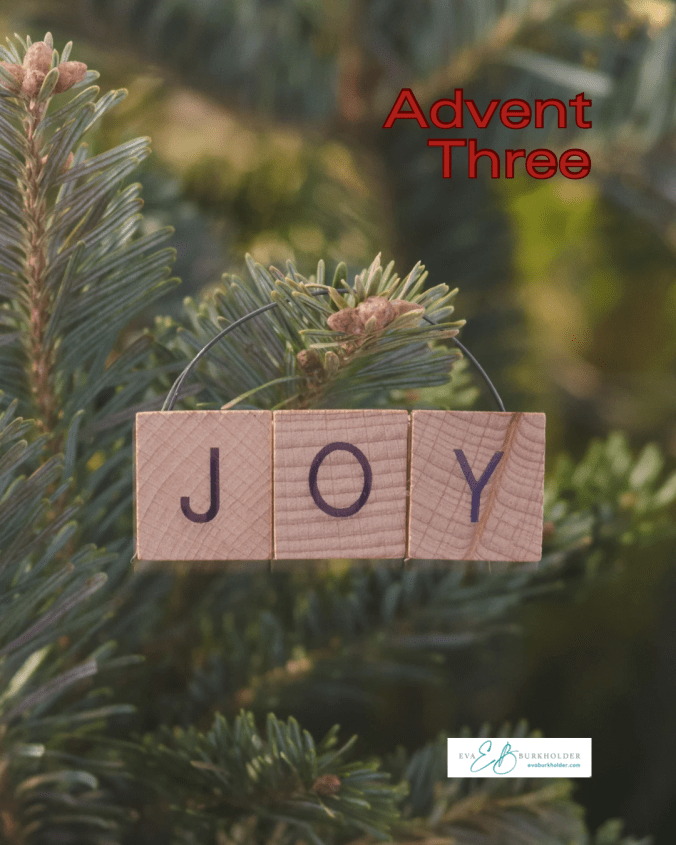
Joy makes an interesting appearance in Paul’s letter to the Galatians via a quote from Isaiah:
For it is written: “Be glad, barren woman, you who never bore a child; shout for joy and cry aloud, you who were never in labor; because more are the children of the desolate woman than of her who has a husband.”
Galatians 4:27 (Isa 54:1) NIV
While Isaiah spoke of the joy (gladness, delight) of Israel’s (future) numerical growth after returning from exile, Paul extends that joy to all believers born under the new covenant. As the childless woman, Sarah, miraculously bore Isaac (Gen 21:1–2), who then produced descendants too numerous to count (Gen 15:5–6), the Virgin Mary miraculously gave birth to Jesus (4:4) to bring many, many children into God’s family. I have joy because I have been adopted (4:5) into God’s family.
Paul also includes joy in the fruit1 that Holy Spirit produces in us:
But the fruit of the Spirit is love, joy, peace …
Galatians 5:22
Paul encourages me that I don’t have to drum up joy when I don’t feel it and when life is far from pleasurable. Instead, as I walk by, am led by, live by, keep in step with, and sow to the Spirit (5:18,25; 6:8), he will produce all the fruit2, including joy in me. The Spirit’s joy enables me to be glad, smile, have fun, and enjoy the life he has given me.
Joy is smattered throughout the Christmas story—the baby in Elizabeth’s womb leaped for joy when she heard Mary’s greeting (Luke 1:44); Mary rejoiced in God her Savior (Luke 1:47); The angels announcement of his birth brought great joy to everyone (Luke 2:10); The magi felt joy when they saw the star which led them to Jesus (Matt 2:10). And according to Paul, we too rejoice that God brings “abundance from desolation,”3 including us in the many children promised to the barren woman.
This Advent, I pray that you will experience the joy of celebrating Jesus’s birth but more so, being part of God’s worldwide family and welcoming many more from every tongue and tribe into the family.
- Paul’s noun is singular here meaning that collectively the fruit will grown in us. Fruit are character qualities formed, not by our own efforts, but by the Spirit’s work in us. ↩︎
- The other advent themes, peace and love, are also included in the fruit. The first theme, hope, is not because hope is a state of mind, a belief, rather than a character trait. ↩︎
- Melissa Moore, Now That Faith Has Come, 173. ↩︎
Discover more from Pondered Treasures
Subscribe to get the latest posts sent to your email.

Pingback: Advent 2025 Fourth Sunday: LOVE | Pondered Treasures